
Nutrition
The Mediterranean Diet, Explained
Of every named dietary pattern studied in the last fifty years, one has the deepest evidence behind it for the heart and the brain. Here is what it actually is, and how to eat it.
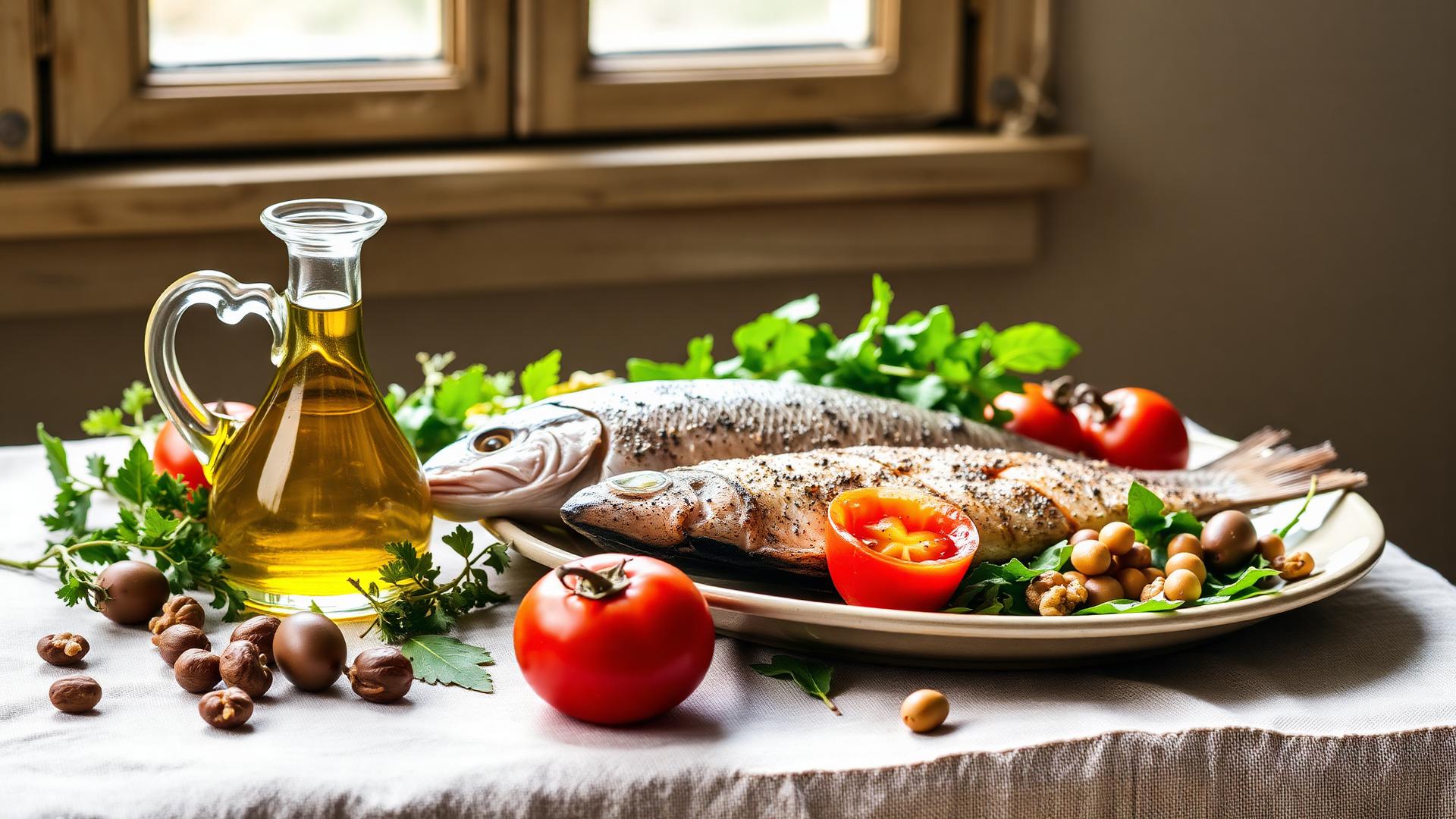
Patients come to clinic exhausted by the nutrition conversation. Keto, paleo, carnivore, plant-based, intermittent this, time-restricted that. The labels multiply and the confusion grows. When a patient asks our clinicians for one pattern with real evidence behind it, the answer is consistent: the Mediterranean diet.
It is not a fad and it is not a brand. It is a description of how people have eaten for centuries along the coasts of Greece, southern Italy, Spain, and the Levant, and it is the most extensively studied dietary pattern in modern medicine. It has been examined in randomized trials, not just food diaries, and it performs well for cardiovascular risk, metabolic health, and cognition as people age.
What the diet actually is
Strip away the marketing and the pattern is straightforward. Most of what you eat comes from plants. Fat comes primarily from olive oil rather than butter or industrial oils. Fish appears regularly, red meat rarely. Food is mostly cooked at home from recognizable ingredients and eaten slowly, often with other people.
Eat daily
Vegetables of several colors, fruit, whole grains such as farro, barley, and stone-ground bread, legumes including lentils, chickpeas, and white beans, nuts and seeds, and extra virgin olive oil as the primary added fat. Herbs, garlic, lemon, and vinegar do the work that salt and sugar do elsewhere.
Eat weekly
Fish and seafood two to three times a week, with an emphasis on oily fish such as sardines, anchovies, mackerel, and salmon for their omega-3 content. Eggs, poultry, and modest amounts of fermented dairy such as yogurt and aged cheese.
Eat rarely
Red meat, processed meat, refined flour, added sugar, and ultra-processed food of any description. Wine, where it is part of a person's life at all, is taken in small amounts with a meal, and it is not something our clinicians ever recommend starting for health reasons.
“The Mediterranean diet is less a set of rules than a default. Once the kitchen is stocked correctly, the right meal becomes the easy one.”
Why it matters for the brain
The brain consumes a disproportionate share of the body's energy and is unusually sensitive to vascular health, insulin signaling, and inflammation. The Mediterranean pattern improves all three at once. Olive oil and nuts supply monounsaturated fat and polyphenols. Oily fish supplies DHA, a structural component of neuronal membranes. Legumes and whole grains blunt glycemic swings. Vegetables and herbs deliver the polyphenols associated with slower cognitive aging in large observational cohorts.
No dietary pattern prevents dementia outright, and anyone who tells you otherwise is selling something. What the evidence supports is a slower rate of cognitive decline and a meaningfully lower burden of the vascular disease that so often accompanies it.
How to start this week
Change the fat first: replace seed oils and most butter with a good extra virgin olive oil. Then add a legume to one meal a day, whether that is lentils in soup or chickpeas in a salad. Put fish on the calendar twice a week. Move meat from the center of the plate to the edge of it. Keep fruit and nuts where snacks used to live.
Nothing here requires a specialty store or a subscription. That durability is precisely the point. A dietary pattern only works if you are still following it in five years, and this is one of the very few that people actually keep.
Where it fits in a care plan
Diet is one input among several. For patients recovering from brain injury, managing sleep disruption, or working to reduce long-term cognitive risk, our clinicians use nutrition alongside sleep, training, and, where clinically appropriate, laboratory testing to see how a given patient is actually responding. The pattern is the foundation. The personalization happens on top of it.
About the author
Dr. Marissa McCarthy
Board certified in Physical Medicine & Rehabilitation with sub-specialty certification in Brain Injury Medicine. Founder of Raeven Health, a concierge practice in Tampa, Florida.
Read full bio